
The Borobudur Temple stupa facts reveal why these distinctive stone structures have become one of the most recognizable features of the ancient monument. Found mainly across the upper circular platforms, the stupas create a remarkable architectural pattern around the central stupa. Their shape, arrangement, and relationship with Buddha statues contribute to the cultural and spiritual character of Borobudur.
Stupas Define the Upper Section
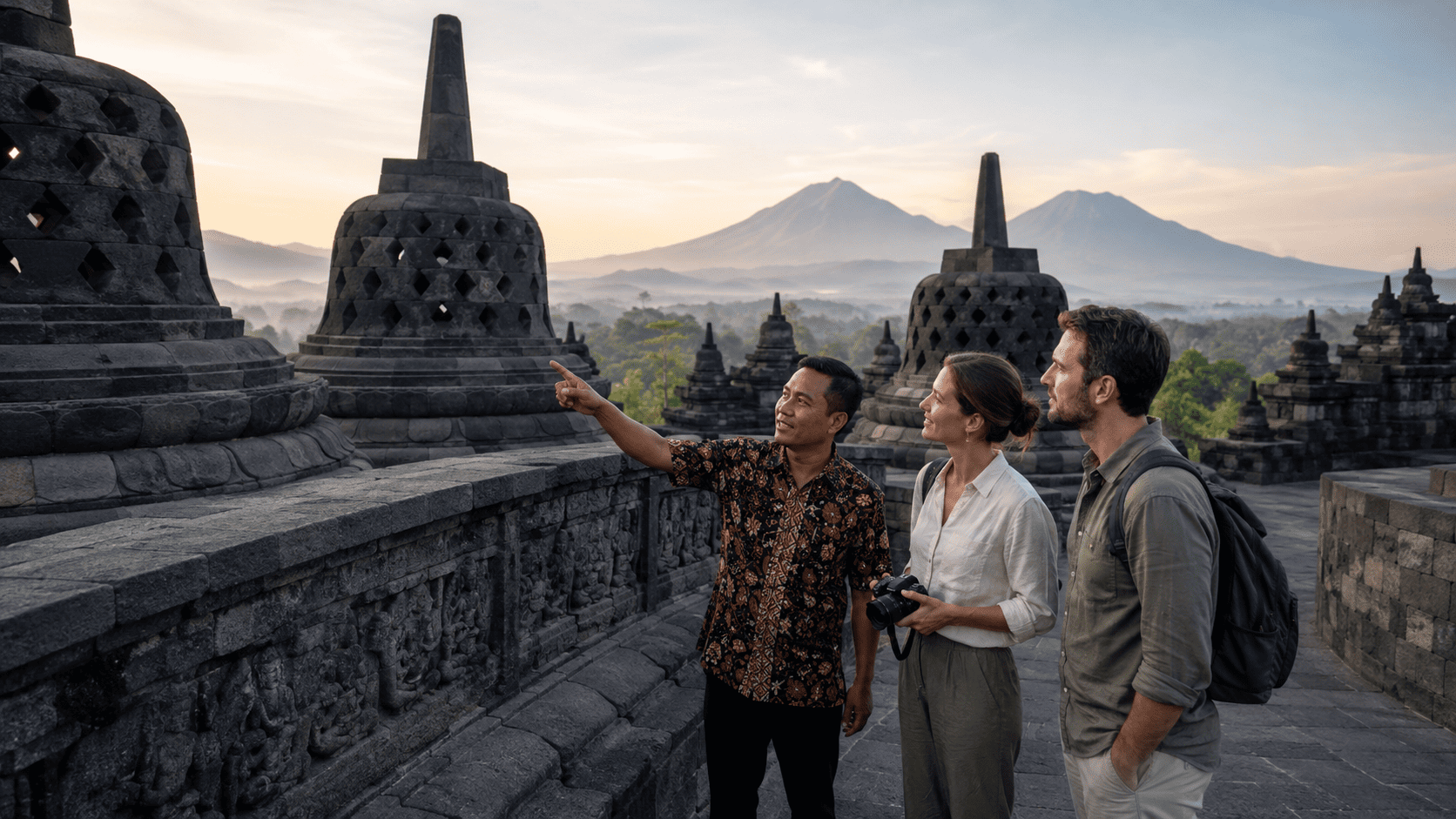
Visitors encounter the most recognizable stupas after reaching the upper circular platforms. These platforms differ from the square galleries below because they contain fewer narrative reliefs and more open architectural space.
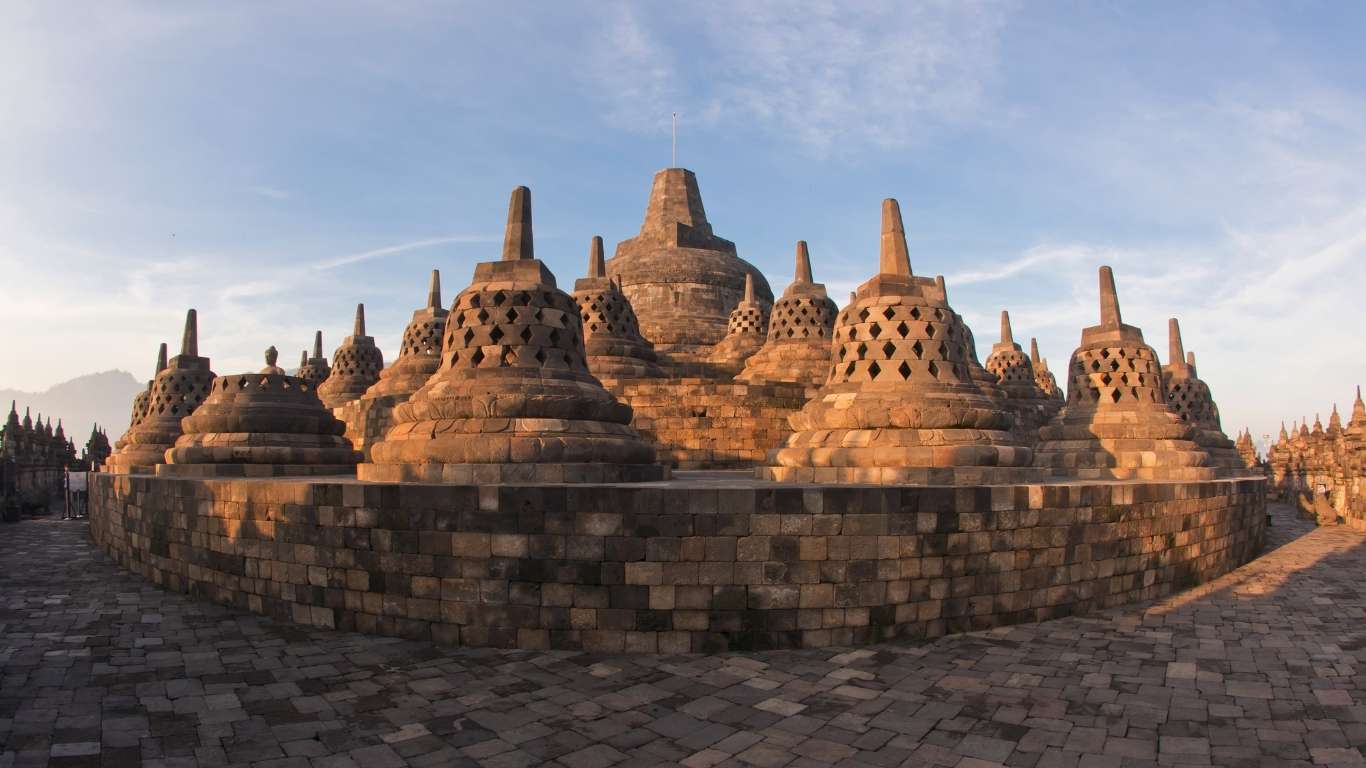
Rows of stupas are arranged around the central structure. Their repeated shapes create a balanced appearance and make the upper part of Borobudur visually distinctive.
The transition from detailed galleries to rows of stupas also creates a noticeable change in the atmosphere as visitors climb higher.
Borobudur Has Perforated Stupas
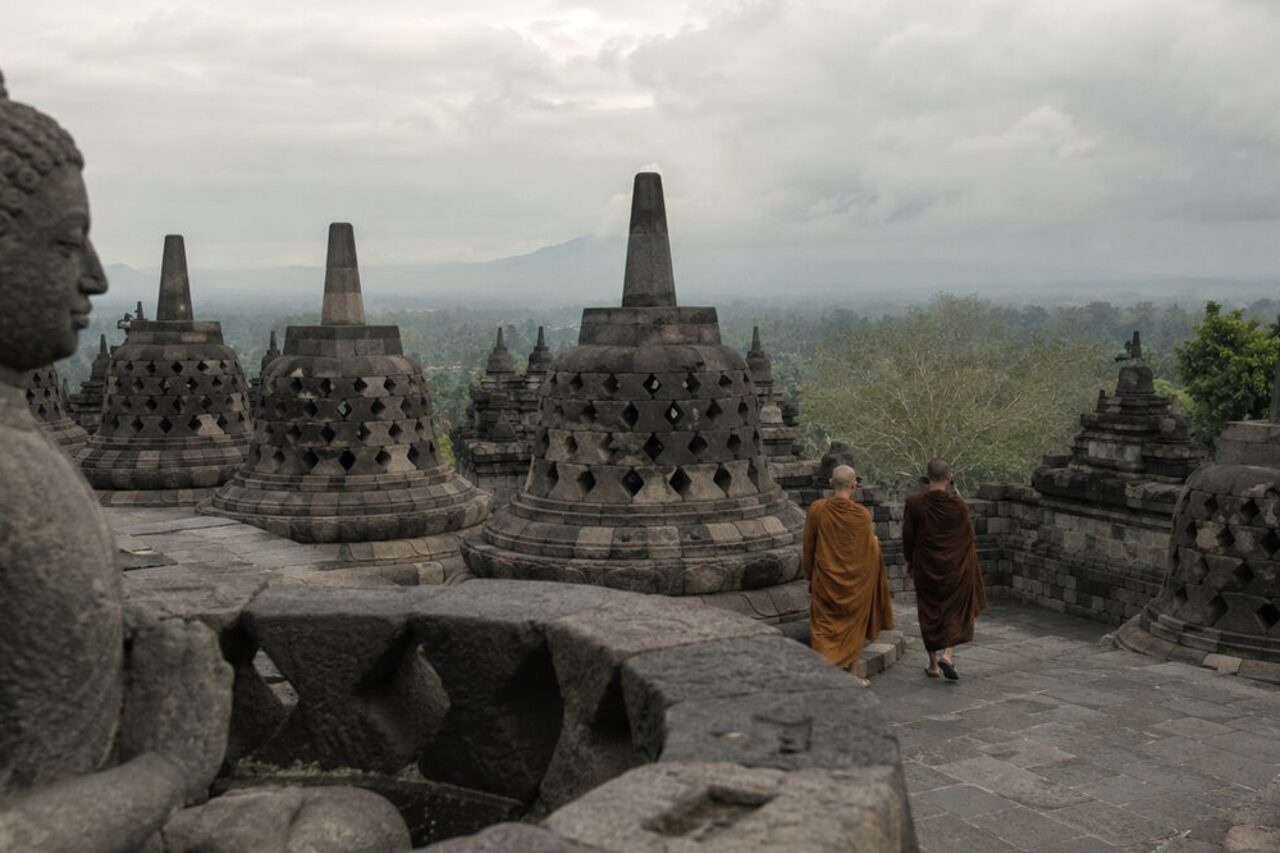
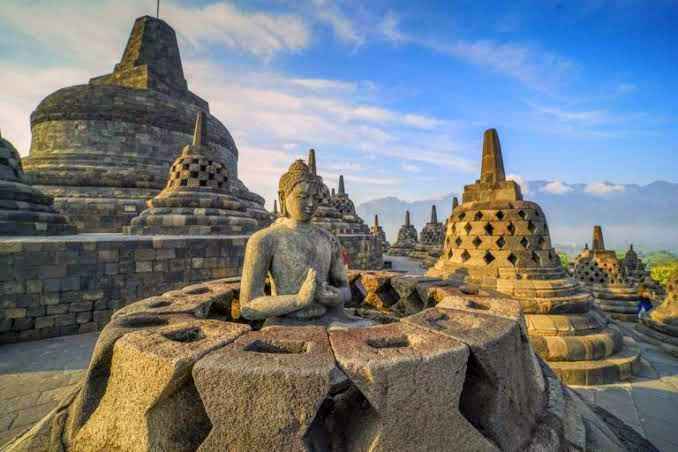
One of the most interesting Borobudur Temple stupa facts is the design of many stupas on the circular platforms. Their stone surfaces contain geometric openings that create a lattice-like appearance.
These openings allow visitors to see the Buddha statues positioned inside. Depending on the viewing angle, the statue may appear clearly or become partially hidden behind the stone pattern.
This interaction between the stone lattice and Buddha figures gives the upper terraces a unique visual quality.
Buddha Statues Are Inside the Stupas
The perforated stupas contain Buddha statues seated within them. Figures remain protected by the surrounding stone structure while still being partially visible from outside.
The combination of Buddha statues and stupas creates a close relationship between sculpture and architecture.
Visitors can observe this relationship by walking around the circular platforms. As their position changes, the appearance of the statues also changes.
For travelers who want to understand more about Borobudur’s history, architecture, Buddhist meaning, and interesting details, this Borobudur facts guide provides a broader overview.
The Central Stupa Has a Different Design
At the highest point of Borobudur stands the large central stupa. Unlike the surrounding perforated stupas, it does not have the same open lattice design.
Its larger scale makes it the main focal point of the upper architectural composition. The surrounding stupas create a visual progression toward this central structure.
Together, these elements give the summit a strong sense of balance and hierarchy.
Stupas Support the Monument’s Symbolism
The stupas are not simply decorative structures. Their position within Borobudur’s upper levels contributes to the monument’s broader Buddhist symbolism.
The architecture changes as visitors move upward. Detailed reliefs dominate the lower galleries, while the circular platforms emphasize stupas, Buddha statues, and open space.
This progression can be connected with the monument’s traditional interpretation as a symbolic journey through various levels of Buddhist cosmology.
The Arrangement Creates a Geometric Pattern
Another notable feature is the organized placement of the stupas. Their repeated forms create a strong geometric rhythm across the circular platforms.
The arrangement looks various from various viewpoints. From one position, the stupas appear as individual structures, while from another, they form continuous circular patterns around the summit.
This careful organization demonstrates how architectural repetition can create both visual harmony and symbolic meaning.
Why the Stupas Are Important
The Borobudur Temple stupa facts show that these structures play an essential role in the monument’s identity. Their perforated designs, Buddha statues, circular arrangement, and relationship with the central stupa make them more than architectural decorations.
Travelers who want to visit Borobudur and other destinations around Central Java can also explore Borobudur Tours.
Taking time to observe the stupas from various angles can reveal details that are easy to miss. Their design demonstrates how Borobudur combines religious symbolism, sculpture, geometry, and architecture into one remarkable monument.